
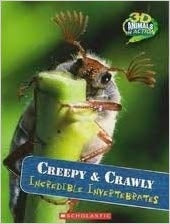

3d Animals In Actions: Creepy & Crawly (incredible Invertebrates)
3d Animals In Actions: Creepy & Crawly (incredible Invertebrates) by Jamie Pietras; Jamie Breheny is available at Global Books.
Trace Evidence is the third essential volume in Peter Ackroydâs Detective Academy series. It explores the "unseen" clues left at a crime sceneâmicroscopic fibres, dust, glass fragments, and chemical residues. Ackroyd explains how Locardâs Exchange Principle (the idea that every contact leaves a trace) forms the basis of modern forensic investigation, allowing detectives to link a suspect to a location using nothing more than a stray thread or a speck of soil.
The book provides a detailed look at how high-powered microscopes and chemical reagents are used to analyse these tiny samples. By investigating real-life cases and forensic experiments, readers learn how the most insignificant-looking materials can become the strongest evidence in a court of law, rounding out the reader's training in the science of deduction.
About Global Books: We specialise in used imported books, local publications, and print-on-demand editions. Our catalogue is continuously updated to help readers, students, and collectors find rare and affordable books online with nationwide and international delivery.
Disclaimer: We have done our best to include all available book details such as author, edition, publisher, and specifications using trusted sources and catalogue data. Some information may occasionally be incomplete or vary by edition.
For confirmation of edition, condition, or additional details, please use the WhatsApp button available after this description â our team will be happy to assist you.
About Global Books: Buy used, rare and print-on-demand books with delivery across Pakistan.
